

THE HEAT IS ON
The heat has arrived, and this is the time of year we’ve been preparing your lawn for all season long.
Cool-season grasses naturally struggle during periods of high heat and humidity. Every application we’ve made and every recommendation we’ve given, many dating back to last season, has been part of a long-term plan to strengthen your lawn before these stressful summer conditions arrived.
Now it’s time for all of that preparation to pay off.
This month, we’ll be sharing practical tips and recommendations to help you do your part in protecting your lawn during the hottest weeks of the year. Together, we can help your turf better withstand the heat, minimize stress, and come through the summer as healthy and strong as possible.
Stay tuned as we cover topics like:
- Proper watering practices
- Mowing during hot weather
- Managing lawn stress
- How to help your lawn recover after hot, humid conditions
A healthy lawn doesn’t happen by chance — it happens through preparation and proper care. Let’s work together to help your lawn thrive this summer.
Why Summer Is Stressful On Your Lawn
Cool season grasses store carbohydrates (energy) during favorable conditions. These reserves help them recover from stress caused by:
- Heat
- Drought
- Disease
- Pests
- Improper mowing practices
The more stress a plant experiences, the more of these stored reserves it uses. Once those reserves are depleted, turf damage begins.
If your lawn received our spring application with slow-release fertilizer, it is still benefiting from a steady supply of nutrients to help through this stressful season.
Fortunately, recent timely rains have helped keep lawns from going dormant. Dormancy is a natural survival mechanism where the plant shuts down top growth to conserve energy and protect the root system. While unavoidable, we want to support the plant so it has the reserves it needs to survive this period.
Why The Current Summer Application Is Important And Part Of The Year Long Plan
We are currently applying our summer application which is targeting broadleaf weeds and annual summer grassy weeds.
Removing these weeds with this round is crucial as weeds compete directly with turf for water and nutrients. We’ve also adjusted our weed control formula for optimal performance in the current hot and humid conditions.
Now Is A Great Time To Evaluate Your Mowing Practices
Correct mowing practices will help keep your lawn healthy during the summer.
- Check mower blades – If grass blades appear ripped instead of cleanly cut, it’s time to sharpen your blades. Dull blades can stress grass, making it vulnerable to pests and disease. The July 4th holiday is a great time to change mowing blades.
- Raise your mowing height – Mow at 3.5 inches or higher. Taller grass:
- Improves turf performance in heat
- Shades the soil
- Reduces stress and water loss

Trimming Recommendations
With proper mowing, your turf will thank you. When trimming we recommend trimming at the same length as you mow. Trimming too low or scalping causes shallow roots creating a stress point for weeds to grow and also leaves those areas susceptible to heat stress.
It’s Time To Change Up Our Watering Practices
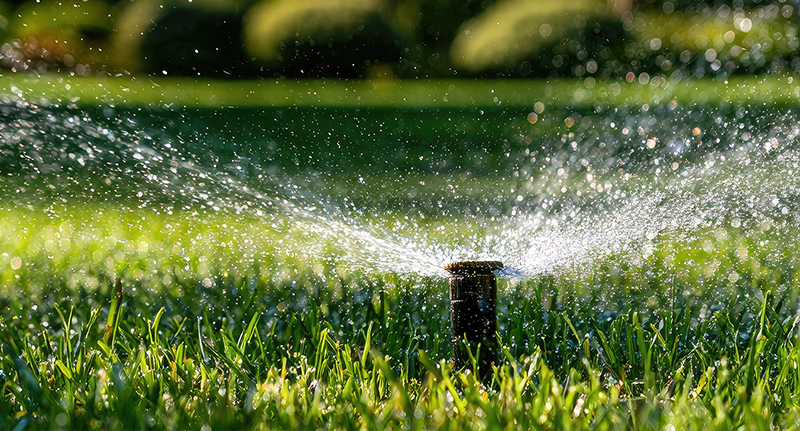
With the heat and humidity on the rise it’s time to change our watering schedules. One of the most important changes you can make during the summer is adjusting your watering schedule. Instead of watering several days each week, we recommend watering just two days per week, while doubling the amount of time you water on those days. This deep, infrequent watering encourages roots to grow deeper into the soil, making your lawn more drought tolerant and resilient during periods of heat and humidity. To maximize efficiency and reduce the risk of lawn diseases, schedule your watering in the early morning hours, allowing the grass blades to dry quickly after sunrise while minimizing water lost to evaporation. Watering less often but more deeply is one of the most efficient and effective ways to help your lawn thrive through the hottest months of the year.
Keeping Up With Your Applications
Our lawn care program is carefully designed as a complete, season-long plan, with every application playing an important role in building and maintaining a healthy lawn. In fact, many of the benefits you’re seeing today are the result of treatments that work together throughout the season. Each service is a critical link in the chain, working together to strengthen your turf and prepare it for the challenges of Iowa’s changing weather. Skipping a scheduled application breaks that chain and increases the risk of weeds, disease, insect damage, and overall lawn decline. Our products and program are specifically selected to help your lawn withstand everything Iowa can throw at it, including the intense heat and humidity of summer, giving your lawn the best opportunity to stay healthy, resilient, and looking its best all season long.
Do I Still Need To Water If There Has Been Rain?
We were fortunate to receive good rainfall over the past couple of weeks. However, your turf and plants still need routine watering during the growing season. We recommend watering a half inch, twice per week. Watering deep a couple of days a week is better than watering shallow multiple days per week.
WE ARE IN THIS TOGETHER
The summer months are the most challenging part of the growing season for cool season lawns. By working together and following these recommendations, we can help your lawn successfully navigate the heat and humidity. Our professional applications, combined with proper watering and mowing practices at home, give your lawn the best opportunity to finish the summer healthy and strong. If you ever have questions about your lawn or need assistance adjusting your care routine, please don’t hesitate to reach out. We’re always happy to help.
