

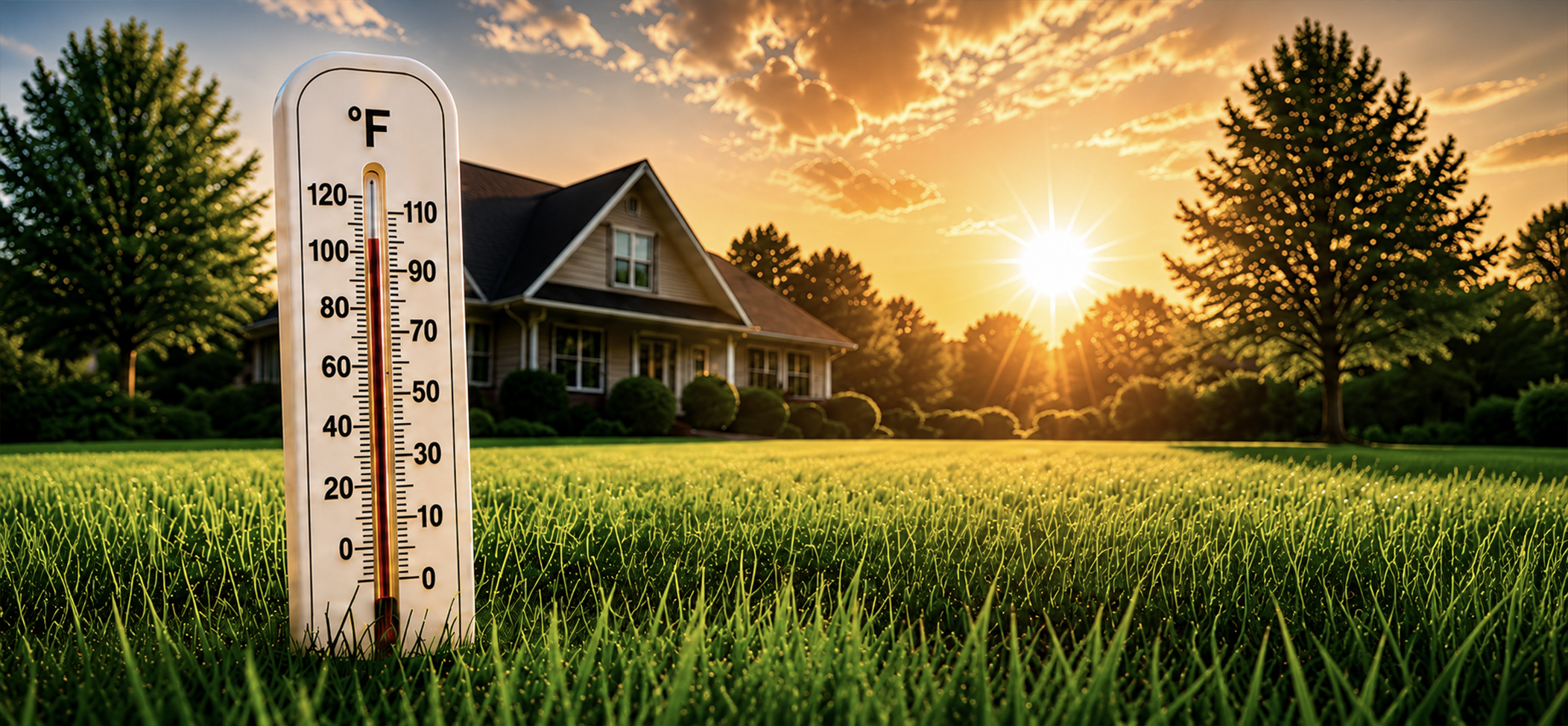
Tropical Weather Meets Midwest Lawns
Over the past two weeks, Iowa has experienced temperatures and humidity levels remarkably similar to those of Miami, Florida. While this may feel like typical summer weather to us, it’s far from ideal for the cool-season grasses that make up most Midwest lawns.
Unlike the warm-season grasses commonly found in Florida, Kentucky bluegrass, perennial ryegrass, and tall fescue naturally slow their growth and begin showing signs of stress when exposed to prolonged heat and humidity. Yellowing, discoloration, thinning, and slower growth are all normal responses during these conditions.
The good news is that these symptoms are temporary. By staying on schedule with your lawn care program, watering deeply during the early morning hours, and remaining patient, your lawn will be well-positioned to recover and return to a healthy, vibrant green as temperatures begin to cool.
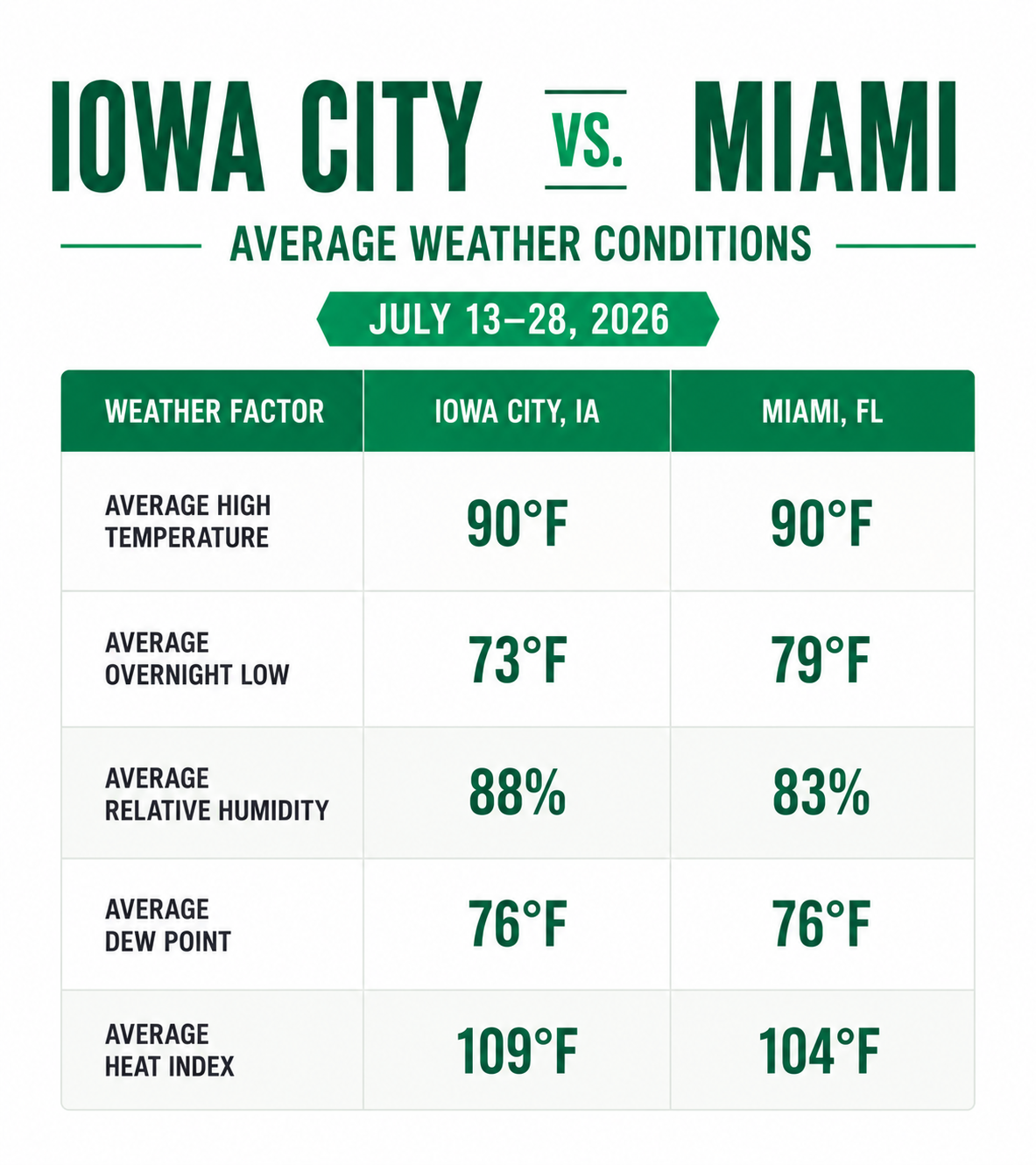
Why Does Cool-Season Turf Struggle In Tropical Climates?
Understanding Heat Stress in Cool-Season Lawns
Heat stress occurs when temperatures remain high for an extended period causing cool-season grasses, including Kentucky Bluegrass, perennial ryegrass, and tall fescue, which are best adapted to the mild temperatures of spring and fall, to use more energy than they can produce.
When daytime temperatures climb into the upper 80s and 90s, especially when combined with tropical humidity, the plant struggles to maintain normal growth because it is using stored energy simply to survive. Instead of producing new leaves and rich green color, the grass shifts its focus to protecting its root system and conserving moisture until environmental conditions improve.
As a result, growth slows, color may fade, and your lawn may develop yellowing or discoloration. While these changes can be concerning, they are a normal response to prolonged heat stress and do not necessarily indicate an unhealthy lawn. As stress continues, symptoms often become more noticeable, beginning in the hottest or driest areas of the lawn before gradually spreading into surrounding turf. Heat-stressed areas may also appear to “track” across the lawn as changing sunlight, soil conditions, and prolonged weather patterns affect different sections over time.
High humidity makes heat stress even more challenging. Normally, grass cools itself through a natural process called transpiration, in which moisture evaporates from the leaves. When the air is already saturated with humidity, that cooling process becomes much less effective. High humidity increases stress on the plant and creates favorable conditions for disease development. Combined with warm nighttime temperatures the conditions limit the lawn’s ability to recover from daytime heat stress resulting in slower growth, yellowing, discoloration, and an overall stressed appearance.
Unlike the warm-season grasses commonly found in Florida, cool-season turf simply isn’t built to thrive in tropical weather. While these symptoms can be concerning, they are a normal response for cool-season lawns during periods of prolonged heat and humidity and should not be mistaken for permanent damage. As temperatures moderate and growing conditions improve, healthy lawns typically recover, returning to normal growth, color, and density.
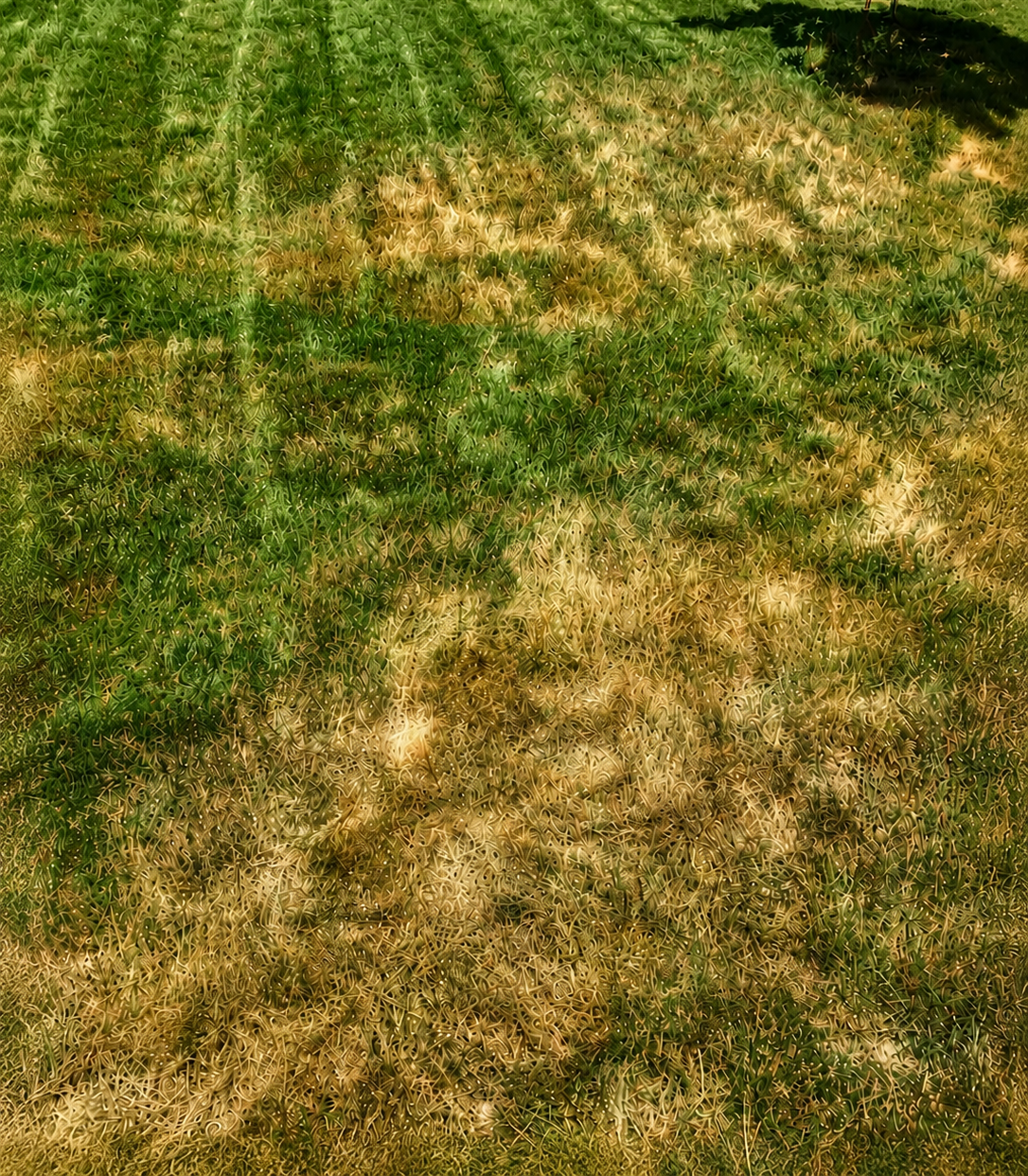
It’s Not Just The Air, It’s The Soil
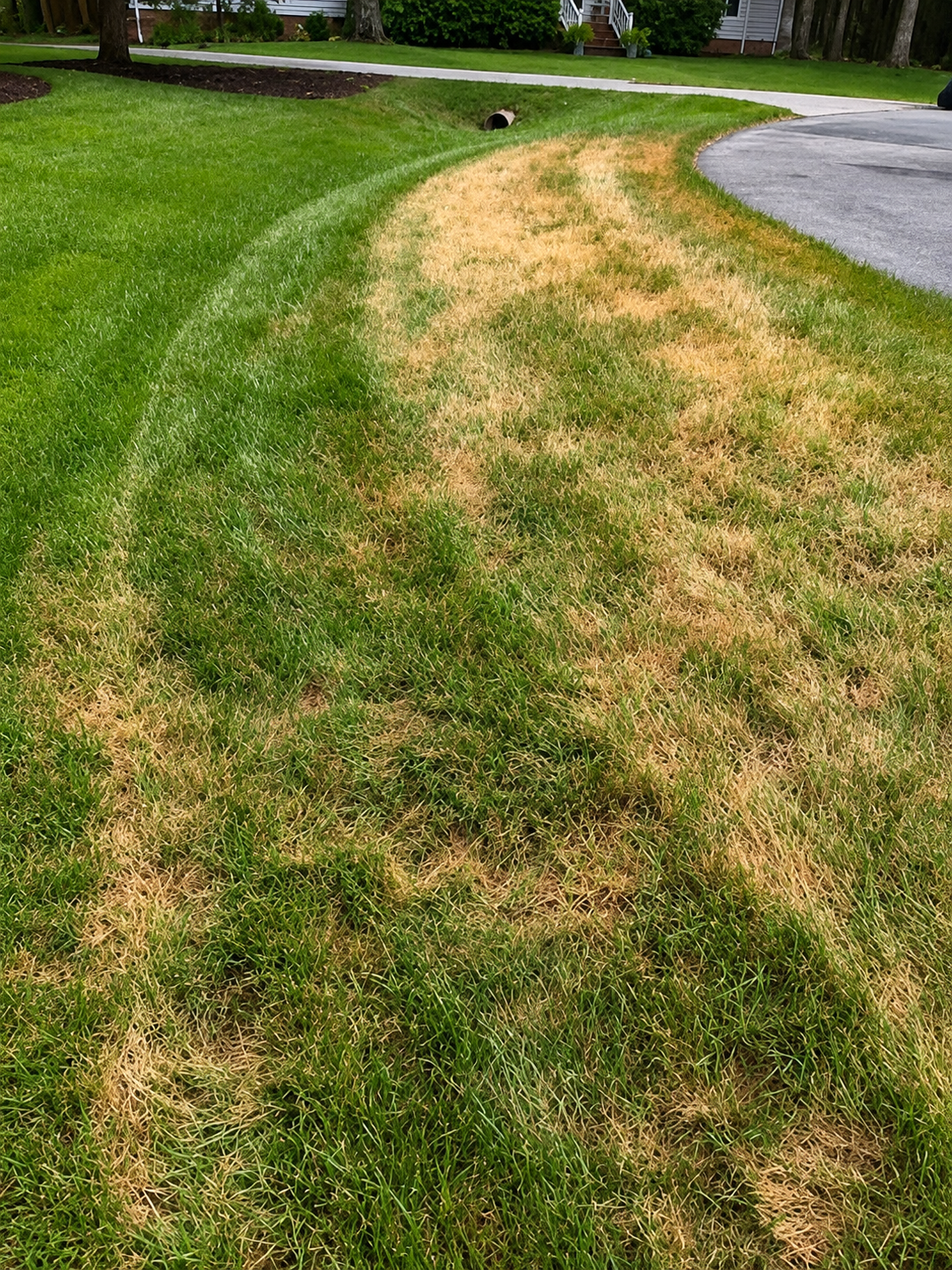
While air temperature is important, soil temperature often has an even greater impact on cool-season lawns during the summer. On sunny days, the soil surface can become significantly hotter than the surrounding air, placing additional stress on the grass roots. When soil temperatures remain elevated for extended periods, root growth slows, water uptake becomes less efficient, and the plant shifts its energy from growth to survival. This often results in slower growth, yellowing, thinning, and an overall loss of color as the lawn conserves its resources.
Lawns located next to driveways, sidewalks, streets, patios, and other concrete or asphalt surfaces are especially vulnerable. These hard surfaces absorb heat throughout the day and then radiate that heat back into the surrounding turf, raising both air and soil temperatures along the edges of the lawn. This “radiant heating” effect causes these areas to experience heat stress sooner and more intensely than the rest of the lawn. As a result, it’s common to see yellowing or browning begin along sidewalks and driveways before gradually expanding into the surrounding turf during prolonged periods of hot, humid weather.
How To Help Your Lawn Beat The Heat
Watering correctly is more important than ever
One of the most important changes you can make during the summer is adjusting your watering schedule. Instead of watering several days each week, we recommend watering just two days per week, while doubling the amount of time you water on those days. This deep, infrequent watering encourages roots to grow deeper into the soil, making your lawn more drought tolerant and resilient during periods of heat and humidity. To maximize efficiency and reduce the risk of lawn diseases, schedule your watering in the early morning hours, allowing the grass blades to dry quickly after sunrise while minimizing water lost to evaporation. Watering less often but more deeply is one of the most efficient and effective ways to help your lawn thrive through the hottest months of the year.
Keep up with your applications
Our lawn care program is carefully designed as a complete, season-long plan, with every application playing an important role in building and maintaining a healthy lawn. In fact, many of the benefits you’re seeing today are the result of treatments that work together throughout the season. Each service is a critical link in the chain, working together to strengthen your turf and prepare it for the challenges of Iowa’s changing weather. Skipping a scheduled application breaks that chain and increases the risk of weeds, disease, insect damage, and overall lawn decline.
Our products and program are specifically selected to help your lawn withstand everything Iowa can throw at it, including the intense heat and humidity of summer, giving your lawn the best opportunity to stay healthy, resilient, and looking its best all season long.
FAQ’s
Do I still need to water if there has been rain?
We were fortunate to receive good rainfall over the past couple of weeks. However, your turf and plants still need routine watering during the growing season. We recommend watering a 1/2 inch, twice per week. Watering deep a couple of days a week is better than watering shallow multiple days per week.
Raise your mower, not your lawn’s stress
During periods of extreme heat and humidity, raising your mowing height is one of the simplest and most effective ways to reduce stress on cool-season turf. Keeping your mower set between 3.5 and 4 inches is ideal during the summer months. Taller grass blades provide more surface area for photosynthesis, helping the plant produce the energy it needs to withstand heat stress. They also shade the soil, keeping root temperatures cooler, reducing moisture loss, and limiting weed germination. Avoid removing more than one-third of the grass blade at a time, and keep your mower blades sharp to make clean cuts that heal quickly. A taller lawn is better equipped to conserve moisture, protect its root system, and recover more quickly when cooler weather returns.
Cooler Days And Greener Grass Are Just Around The Corner
The summer heat won’t last forever, and neither will the stress on your lawn. Stay patient, trust the process, and remember that the foundation for a healthy lawn has already been put in place. As cooler temperatures return, so will the growth, color, and density you’ve been working toward all season.
FAQ’s
Do I still need to water if there has been rain?
We were fortunate to receive good rainfall over the past couple of weeks. However, your turf and plants still need routine watering during the growing season. We recommend watering a 1/2 inch, twice per week. Watering deep a couple of days a week is better than watering shallow multiple days per week.
Raise your mower, not your lawn’s stress
During periods of extreme heat and humidity, raising your mowing height is one of the simplest and most effective ways to reduce stress on cool-season turf. Keeping your mower set between 3.5 and 4 inches is ideal during the summer months. Taller grass blades provide more surface area for photosynthesis, helping the plant produce the energy it needs to withstand heat stress. They also shade the soil, keeping root temperatures cooler, reducing moisture loss, and limiting weed germination. Avoid removing more than one-third of the grass blade at a time, and keep your mower blades sharp to make clean cuts that heal quickly. A taller lawn is better equipped to conserve moisture, protect its root system, and recover more quickly when cooler weather returns.
